How to Plan the New Year – 10 Simple Tips to Make 2026 Your Best Year Yet

A new year always brings a sense of possibility that is completely unbeatable. Unfortunately, possibility alone isn’t enough to actually get you the life you want.
Most of us focus entirely on our New Year’s resolutions, promising ourselves that we are going to change overnight with our “new year, new me” mantras.
But alas, that momentum only lasts for a few weeks, and 80 percent of people actually quit their New Year’s resolutions before the beginning of March. But do you know what the core problem is? It’s the lack of structure.
An intentional year can’t be built on wishful thinking. It needs thoughtful preparation. To have a great and intentional 2026, you need to understand where you’ve been, what matters to you, and how you want the next 12 months to go.
And yes, I know, planning for the whole year can feel daunting. Where do you start? How do you make sure you actually stick to those plans? And how do you deal with all the unpredictable things that can just pop up?
In this post, I am going to show you exactly how to plan the new year to make 2026 your best year yet.
Get Your 2026 Mini planner
Enter your email below to receive our freebie delivered to your inbox.

How To Plan The New Year
1. Start by Reflecting on the Past Year
This is common sense. Before you decide where you’re going, it is super important to look back on where you’ve been.
Reflection is the core foundation of intentional planning because it gives you self-awareness.
To start, grab your notebook and spend some quality time looking back at the past year.
Ask yourself: What worked? What didn’t? Which habits genuinely supported your growth, and which ones kinda held you back? What challenges shaped you in 2025? What accomplishments made you proud?

And remember, reflection goes beyond merely answering these questions. It can reveal repeating patterns, emotional triggers, or neglected areas of your life that deserve a little love in 2026.
Don’t skip this step. This is the step you need to make sure 2026 isn’t just a continuation of old cycles but a deliberate shift towards something better.
2. Identify Your Core Priorities
After reflecting on the highs and lows of 2025, the next step is to define what truly matters to you in 2026.
Your priorities are like filters, and they’re super important because they help you decide what to say yes to, and just as important, what to turn down. You only have so many hours in the day; you need to prioritize what is important to you.
Take some time and choose a few key areas in your life that you want to invest more deeply in. It could be your health and wellness, your career, your financial freedom, personal development, relationships, spirituality, or just about anything else.
Pick a few or one to truly focus on. Go with something that will genuinely improve your life in 2026.
When you identify your priorities when planning the new year, every decision you make in 2026 will be clearer and aligned with what you truly want.
3. Choose a Vision or Theme for the Year
A yearly theme is what will tie everything together. A vision for 2026 will give your goals and habits a sense of purpose and anchor your choices in a bigger vision.
Your theme or vision for the year could be a single word like “growth,” “balance,” “strength,” or a short phrase such as “take action” or “live with intention.”
And remember, your theme isn’t just another goal to chase, far from it. Your theme is a compass. When at any point you’re unsure what decision to make, your theme will guide you. Whenever you feel overwhelmed or frustrated, your theme will remind you exactly what 2026 is about.
When you choose your theme during your “how to plan the new year” session, you align your priorities with your deeper intentions, and this will make the rest of the planning cohesive and meaningful.

4. Set Your SMART Goals
Now that your priorities and vision are defined, the next step is to set concrete goals for the new year.
Use the SMART framework to set your goals:
- Specific: The goal is clear and defined.
- Measurable: You can actually track your progress.
- Achievable: The goal is challenging, yes, but realistic.
- Relevant: The goal actually aligns with your priorities and yearly theme.
- Time-bound: There’s a deadline or a timeframe.

You need SMART goals. SMART goals prevent that vague, resolution-style planning that often fails a few weeks into the new year.
And remember to choose goals that actually support your theme rather than any random ambitions that look impressive but don’t reflect exactly what you want in 2026.
Get this poster board to help you create your 2026 theme and vision board.


5. Break Your Goals Into Quarterly Plans
A year is a really long time, and even the most motivated person in the world can easily lose direction without some sort of structure.
Breaking your goals into quarterly plans makes them easier to manage and will keep them from fading into the background.
Quarterly planning makes each quarter its own focus period, a 90-day window with a specific purpose to the big picture.
Choose two or three goals or milestones to concentrate on during each quarter. This will make sure you never feel overwhelmed and give each of your goals a realistic time frame to flourish.
Besides, quarterly planning can also create some space for flexibility. I mean, life changes, priorities shift, and some unexpected opportunities come up. The three-month segments allow you to stay committed while having some sense of flexibility to adjust before moving to the next phase of the year.

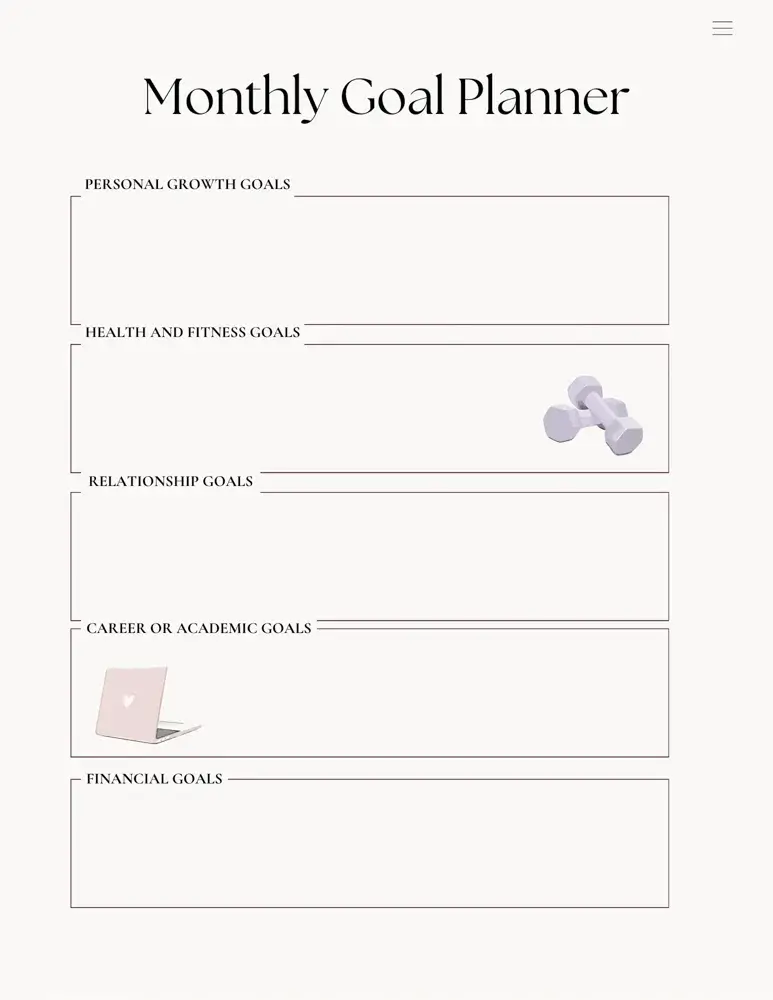
6. Map Out Monthly Intentions
Monthly Intentions is how you bridge the gap between long-term goals and your day-to-day living.
While quarterly plans create direction, monthly Intentions create the momentum you need to follow through.
Look at your quarterly focus and break them further.
- What needs to happen this month for progress to feel real?
- What habits should I focus on? Any to reduce?
- What small tasks fit naturally in the next 30 days?
The whole idea of monthly intentions or themes is based on the fact that a month is long enough to achieve something meaningful but also short enough to remain focused.
Not to mention, this can give each month a unique angle and approach, creating some much-needed uniqueness in how you approach your goals.
7. Create Weekly Action Steps
Of course, I don’t expect you to plan for all 52 weeks at the beginning of the year. That would be too rigid, and honestly, a big disaster. The best way to approach it is to plan your weeks on a monthly or weekly basis.
Look at the big picture, your priorities, your yearly theme, and your goals for 2026, then review your quarterly and monthly intentions and choose key tasks or habits to focus on at the beginning of each month or week.
It could be simple activities such as scheduling workouts, setting time aside for budgeting, planning meals, or blocking out work sessions.
Weekly planning is what will bring in some clarity. Instead of waking up hoping the week will align with your big picture, you actively take control of your time and energy to make it happen.
Weekly planning will also help you prevent procrastination because you’ll have an action plan rather than a vague idea.

8. Build Daily Habits That Actually Support Your Goals
Now here’s where the work is. Small, consistent daily habits are how you actually achieve your goals.
And you don’t need to complicate it. In fact, make them as easy as possible. Simplicity will make them sustainable.
Focus on habits that directly support your larger goals. For instance, if your goal is personal development, read a few pages of a self-help book each morning, practice a short mindfulness exercise, and prioritize sleep every day.
Daily habits are how you’ll reinforce progress consistently. And if your habits truly align with your yearly theme and priorities, there’s no stopping you. You’ll have an intentional 2026.

9. Stay Flexible Throughout the Year
This is the most important thing to remember when you plan your new year. Intentional planning doesn’t mean rigid planning.
Flexibility is a must for any system meant to last for a whole year.
Your goals, priorities, or circumstances may shift, and you must realize that this is normal. Flexibility will allow you to adjust without abandoning ship.
Give yourself permission to revisit plans, to rewrite deadlines, or completely reset and change focus as your life moves.

10. Track Your Progress and Use Accountability Tools
Tracking is a must if you want to see your goals through. This is true for almost anything in life.
Without any system of tracking or accountability, even the most thoughtful plan can fade.
Go for whatever tracking method you like best: a Google Sheets daily habits tracker, journals, digital planners, or even physical habit trackers. It doesn’t matter much. The main goal is awareness.
Regular check-ins will highlight what’s working and what needs a little adjustment.
Get Your 2026 Mini planner
Enter your email below to receive our freebie delivered to your inbox.
Bonus: Celebrate Your Wins
Most of us often overlook celebration when planning. Yet, it is a very important aspect of remaining motivated. And a year is a long time; you need to celebrate your wins to stay motivated.
Taking the time to celebrate your wins, big or small, is like reinforcing the belief that change is actually happening.
You can celebrate by treating yourself to your favorite meal, going out with your bestie, or taking some time off work to just relax at home.
Go Right Ahead and Plan the New Year
To plan for an intentional new year isn’t about the perfect roadmap, far from it. These tips will just help choose a direction with a little bit of clarity and purpose.
The steps I have mentioned above will help you plan the new year by understanding what matters to you, breaking it into actionable steps, and staying on top of your goals even when life shifts throughout the year.
Here’s to making 2026 the best one yet. Happy New Year, loves.