The Most Common Types of Magnesium ( And What Each One is Best For)

If you’ve ever tried to buy a magnesium supplement, you’ve probably noticed something confusing right away: there isn’t just one magnesium.
There’s magnesium for sleep, magnesium for stress, magnesium for digestion, magnesium for focus,…and somehow they all sound like they’re doing something completely different.
It’s no wonder some people feel stuck, wondering which one they actually need, or if they even need magnesium at all. After all, shouldn’t eating magnesium-rich foods suffice?
The truth is, magnesium plays a role in hundreds of processes in the body, from muscle function and energy production to mood, sleep, and nervous system balance. And unfortunately, studies show that almost 50 percent of Americans don’t get enough magnesium. For something so important in the body, this is completely unacceptable.
So, yes, if you’re not getting enough magnesium from food, you should definitely consider supplements. But the type of magnesium supplement matters more than most people realize.
Some forms are better absorbed, some target specific systems, and others may be included simply because they’re inexpensive, not because they’re effective.
So, you have to do your due diligence. And today, we start here. This guide looks at the most common types of magnesium and their uses to actually help you choose one that actually fits your needs.
Why Magnesium Matters (More Than You Think)
Magnesium is one of those minerals that quietly does everything, and unfortunately, gets almost no credit for it.
Indeed, magnesium supports more than 300 metabolic reactions that keep you healthy, including:
- Muscle contraction and relaxation
- Nervous system regulation
- Energy production
- Blood sugar balance
- Hormone and cortisol regulation
Yet, a lot of people are unknowingly low in magnesium thanks to chronic stress, poor sleep, high caffeine intake, poor nutrition, especially the tendency to go for processed foods, and depleted soil nutrients.
And when magnesium is low? Your body actually feels it, often as tension, irritability, poor sleep, low energy, and other stubborn stress symptoms.
Indeed, magnesium deficiency can cause severe health issues like nausea, headaches, constipation, cramps, numbness or tingling, irregular heartbeat, fatigue, and general weakness.

How Magnesium Supplements Actually Differ
Here’s what to know. Magnesium supplements are not just magnesium.
Each supplement is magnesium bound to something else, like glycine, citrate, oxide, or malate. That “something else” affects:
- How well your body absorbs it
- Where exactly it works in the body
- How gently ( or not) it is on digestion
This is why one person can swear magnesium changed their sleep while another says it sent them running to the bathroom. Different types, different results.
Some forms are highly absorbable and actually calming, while others barely absorb at all and mostly work as laxatives.
So, you need to understand the different types of magnesium for everything else to start making any sense.
Common Types of Magnesium & What They’re Best For
1. Magnesium Glycinate
Magnesium glycinate is one of the most popular types of magnesium. And for good reason.
It’s bound to glycine, an amino acid that supports relaxation and nervous system balance.
This combination makes it:
- Highly absorbable
- Gentle on the stomach
- Unlikely to cause diarrhea
People often use magnesium glycinate for:
- Trouble sleeping
- Feeling wired but tired
- Stress and anxiety
- Muscle tightness
- High cortisol symptoms
If you’re new to magnesium, magnesium glycinate is often a good starting point because it is calming without digestive side effects. I use this one from Pure Encapsulations, and it has been a game-changer for my quality of sleep.


2. Magnesium Citrate
Magnesium citrate is magnesium bound to citric acid. It’s one of the more common magnesium supplements.
Magnesium citrate is among the most bioavailable forms of magnesium, meaning it’s absorbed more easily in your digestive tract compared to other forms. It’s typically taken to replenish low magnesium levels.
This form of magnesium pulls water into the intestines, which makes it effective for:
- Constipation relief
- Sluggish digestion
- Occasional bloating
However, based on how it works, magnesium citrate can easily cause:
- Loose stool
- Cramping
- Digestive urgency if taken in higher doses
This doesn’t make magnesium citrate “bad,” it just has a specific function apart from replenishing low magnesium levels.

3. Magnesium Oxide
This is another common magnesium form that you’ll see around.
It’s more common, mainly because it’s cheap to produce.
Magnesium oxide is a salt that combines magnesium and oxygen. This naturally forms a white powdery substance that is sold in powder or capsule form.
Studies show magnesium oxide is poorly absorbed in the digestive tract, and as such, it’s not typically used to replenish low magnesium levels.
Indeed, most of the magnesium oxide you’ll take:
- Isn’t absorbed well
- Stays in the digestive tract
- Can actually be used as a laxative
This is why it’s sometimes used for:
- Occasional heartburn
- Indigestion
- Constipation
- Short-term migraine relief
So, if you’re taking magnesium for stress, sleep, or long-term wellness, magnesium oxide is not the best choice.

4. Magnesium Malate
Magnesium malate is magnesium bound to malic acid, a compound involved in energy production inside your cells.
It is very well absorbed in your digestive tract, making it a good option for replenishing your magnesium levels.
Apart from replenishing magnesium levels, this form of magnesium is good for people dealing with:
- Low energy
- Muscle soreness or aches
- Exercise recovery
- Chronic fatigue-type symptoms
Unlike the calming effects of something like magnesium glycinate, magnesium malate can feel slightly energizing, so it’s usually better to take it earlier in the day rather than right before bed.

5. Magnesium L-Threonate
This is the “brain magnesium.”
Well, why is it the “brain magnesium?” It’s one of the few forms shown to cross the blood-brain barrier, meaning it directly affects magnesium levels in the brain.
Magnesium L-Threonate is the salt formed from mixing magnesium and threonic acid, a water-soluble substance derived from the metabolic breakdown of vitamin C.
People often use this form of magnesium for:
- Brain fog
- Focus and concentration
- Memory support
- Mental clarity
Magnesium L-Threonate is usually taken in smaller doses and is more expensive. However, this is the best option for you if cognitive support is your primary goal.
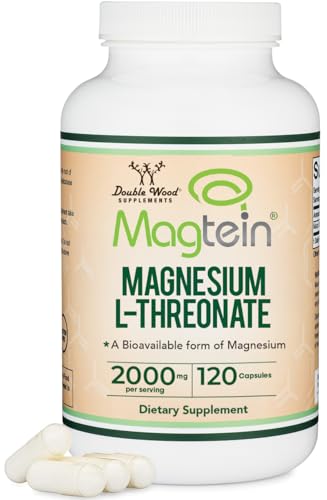
And if you really want to see results, go for magtein. Magtein is a patented, highly bioavailable form of magnesium L-Threonate, specifically created to cross the blood-brain barrier. This one from Double Wood Supplements is a great option.
6. Magnesium Chloride
Magnesium chloride is a magnesium salt that includes chlorine.
It’s absorbed well in the digestive tract, making it a good option for replenishing low magnesium levels.
While it is taken as a supplement in capsule or tablet form, it is also a very common ingredient in topical products.
You’ll find it in:
- Magnesium oils
- Lotions
- Sprays
- Flakes ( often added to baths)
Topical magnesium is popular for:
Muscle cramps
Tight shoulders and calves
Post-workout recovery
You should know, while some people feel relief, others don’t notice much difference. Absorption through the skin varies, and little research links topical applications to improved magnesium levels.
7. Magnesium Taurate
Magnesium taurate is bound to taurine, an amino acid known for supporting the heart and nervous system through antioxidant, anti-inflammatory, and regulatory functions.
This form of magnesium is a good choice for:
- Cardiovascular support
- Blood pressure balance
- Calming without sedation
- Stress that feels more “physical” than mental
Magnesium taurate is gentle, well-absorbed, and a great option if stress shows up as tension, palpitations, or the constant “on-edge” feeling.

Other Magnesium Types You May See( Quick Mentions)
Magnesium Lactate
Magnesium lactate is bound to lactic acid. Some people use this form when they can’t tolerate magnesium citrate or oxide since it’s gentler on digestion.
It’s well-absorbed but not widely marketed as a dietary supplement and is more commonly used as a food additive to regulate acidity and fortify foods and beverages.
Magnesium Sulfate
This form is formed by combining magnesium, sulfur, and oxygen. Most people know this form as Epsom salt.
It’s not typically used as an oral supplement. It is mainly used in baths for muscle relaxation and soreness.

Magnesium Orotate
This form of magnesium includes orotic acid. It’s well absorbed and often discussed in relation to heart and cellular health.
Magnesium orotate is more popular among competitive athletes and fitness enthusiasts. It’s generally more expensive than other forms of magnesium.
How to Choose the Right Magnesium
Instead of asking, “what’s the best magnesium?”
Ask: “What do I want magnesium to help with?”
Here’s a simple guide that might help you:
- Trouble sleeping or high stress- magnesium glycinate
- Constipation or digestion issues – magnesium citrate
- Low energy or muscle soreness – magnesium malate
- Brain fog or focus issues- magnesium L-threonate
- Heart or nervous system support – magnesium taurate
You don’t need every type, just the one that matches your main concern.
And remember, always go with supplements that are third-party tested.

Final Thoughts on the Most Common Types of Magnesium
As you can see, there isn’t one “perfect” type of magnesium, and you don’t need to chase every new supplement trend.
If your primary concern is replenishing low magnesium levels, you should go for any one of the well-absorbed magnesium types. If you want something more than just replenishing low levels, choose something based on what your body actually needs.
As with any supplements, please talk to your doctor before starting magnesium. This is particularly important if you have any pre-existing health issues.
Until the next one, happy shopping.
Next read: Top Foods High in Magnesium You Should Be Eating Daily
